Three painted surfaces · art pilot
A little ground to explore
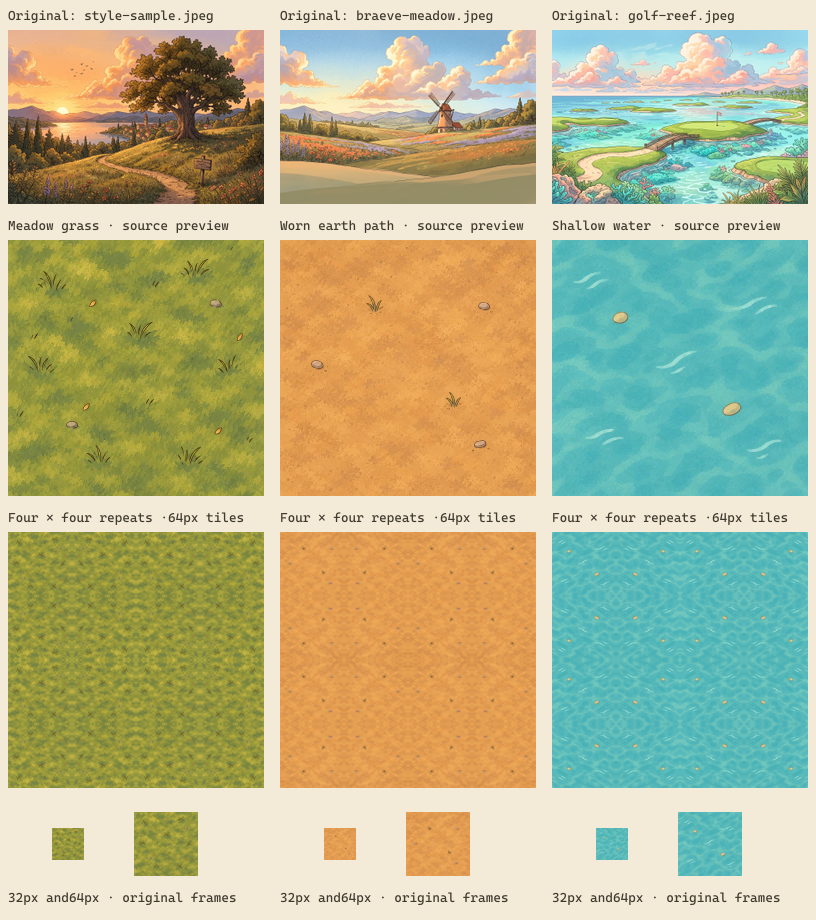
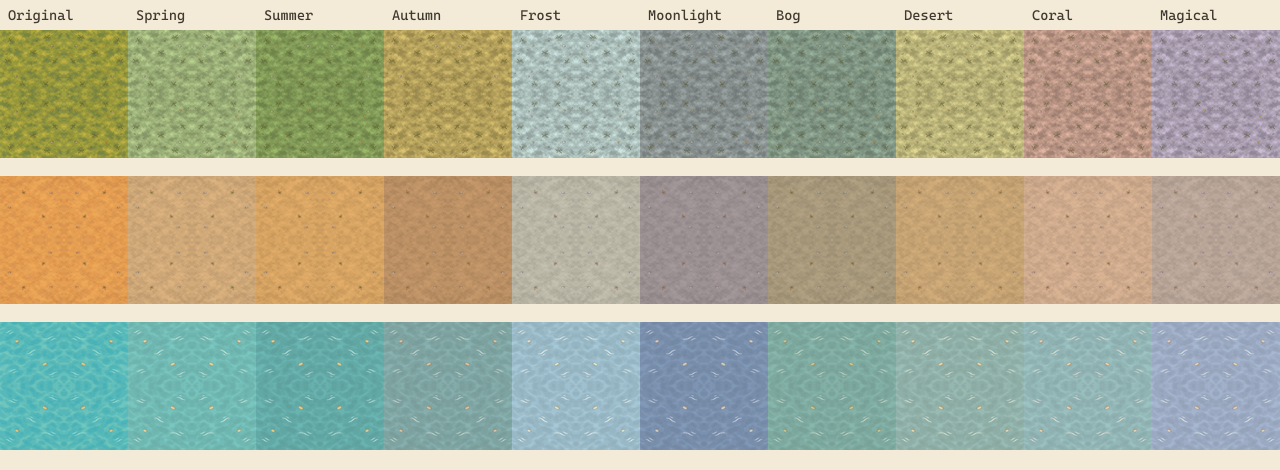
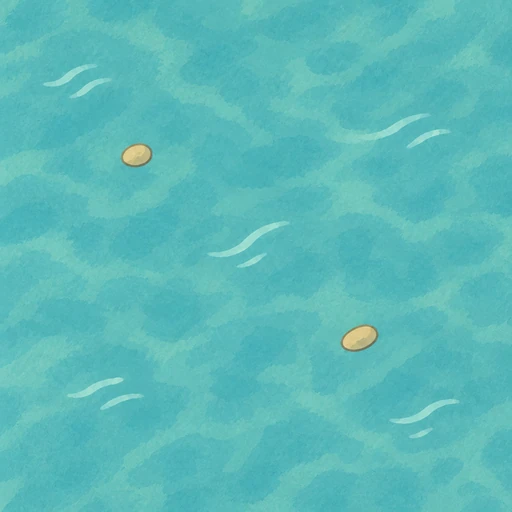
Grass, worn earth and shallow water, with ten colour collections and separate materials you can change.
Preparing the painted surfaces…
These smaller frames are the usable game exports. The large illustration below is a source preview.
Download original frame · RGB map

These joins deliberately show the missing transition work. They are not finished grass edges or shores.
The three original paintings
What is ready
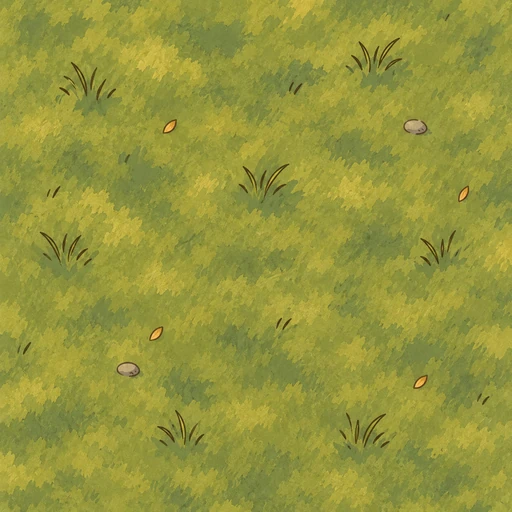
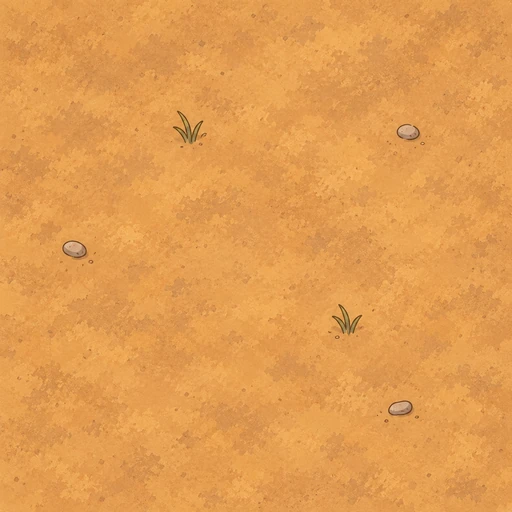
Three generated designs. Lossless32/64/1024px frames and aligned RGB weights. Original colour bypass preserves the frame pixels exactly. Material recolouring keeps unassigned ink and texture shading. Ten collections are reusable colours, not thirty new drawings.
At tile coordinate (x,y), mirror horizontally when x is odd and vertically when y is odd. Use the same transform for art and maps and keep coordinates continuous across room chunks. Repeats use a two-tile period; arbitrary rotated copies, different neighbouring palettes and unlike materials do not have guaranteed seams.
Asset manifest · Ten collections · Pixel checks · Reference and scale sheet · All palette previews